
Setting the Pace® for Food Safety Testing and Analysis
Pace® delivers comprehensive microbiology and chemistry testing to detect harmful pathogens, verify product composition, and screen for critical contaminants. Using advanced culture, molecular, and analytical technologies, we provide fast, actionable data to support regulatory compliance, accurate labeling, and consistent quality. From routine testing to contamination response, our experts help protect consumers, your products, and your reputation every step of the way.
- Detection of harmful bacteria, yeasts, molds, and high-risk pathogens such as Salmonella, Listeria, and E. coli
- Support of HACCP programs, hygiene practices, and process controls
- Measurement of moisture, pH, and nutritional content for accurate product characterization
- Screening for pesticide residues, heavy metals, and mycotoxins
- Support for FDA, USDA, SQF and BRC compliance, recall prevention, and brand protection
REACH OUT TO OUR EXPERIENCED STAFF WITH ANY QUESTIONS OR TO LEARN MORE

Microbiology Food Testing
At Pace®, we understand that microbiological safety is critical to protecting consumers and ensuring regulatory compliance. Our microbiology services are designed to detect pathogens, assess microbial quality, and safeguard your products from contamination. Using trusted methods and advanced technologies, we provide accurate, actionable results to support your food safety and quality assurance programs.
Pathogen Testing
Food safety starts with confidence in your testing program. Our pathogen testing services help you identify and eliminate harmful microorganisms before they pose a risk to consumers or your brand. We test for leading foodborne pathogens such as:
- Salmonella
- Listeria monocytogenes
- Shiga Toxin-Producing E. coli (STEC)
- E. coli O157:H7
- Campylobacter species
- Clostridium perfringens
- Staphylococcus aureus
- Pseudomonas aeruginosa
- Bacillus cereus


Indicator and Spoilage Organisms
Indicator and spoilage testing provides early, actionable insight into microbial quality, safety, and shelf life. Using non-pathogenic microorganisms as practical indicators, these tests reveal sanitation and process control gaps before pathogens or product failures occur. Indicator organisms highlight hygiene risks during production, while spoilage organisms signal shelf-life and sensory concerns such as off-odors, flavors, or texture changes—enabling proactive quality protection and reinforcing brand integrity and consumer trust.
We test for a variety of key indicators, including but not limited to:
- Enterobacteriaceae
- Aerobic Plate Counts
- Yeast and Mold Counts
- Lactic Acid Bacteria
- Coagulase-positive Staphylococci
Chemistry Food Testing
At Pace®, our chemistry services are designed to deliver precise and reliable analyses that meet the diverse needs of the food industry. Whether you’re monitoring product quality, assessing safety, or ensuring compliance with regulatory standards, our team of experts provides actionable data to support your operations. Using robust instrumentation and quality methodologies, we help you maintain the highest standards of quality and safety for your products.


Quality Indicators
FoodUnderstanding and controlling key chemical properties is essential to product quality, freshness, and shelf life. Our quality indicator testing evaluates rancidity indicators, moisture content, water activity (Aw), and pH to deliver clear insight into product stability, safety, and performance. This testing supports shelf-life validation, quality assurance, and confident formulation decisions.
We offer comprehensive testing for:
- Free Fatty Acid (FFA)
- Peroxide Value (PV)
- Moisture Content
- Water Activity (Aw)
- pH Testing
- Anisidine Value (AV)
Contaminant Analysis
Contaminants in food products can threaten consumer safety and regulatory compliance. Our contaminant analysis evaluates heavy metals, mycotoxins, aflatoxins pesticide residues, and undeclared allergens to ensure your products meet safety standards. By providing accurate, reliable results, we help you mitigate risks, protect consumers, and maintain trust in your brand.
We test for:
- Heavy Metals
- Mycotoxins
- Aflatoxins
- Pesticides
- Allergens

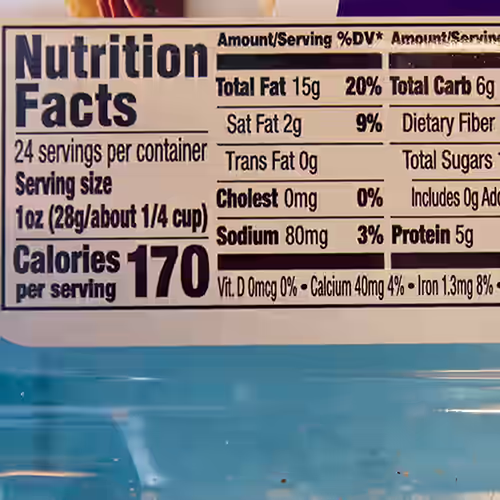
Nutritional and Compositional Testing
Accurate nutritional data is essential for labeling compliance and consumer transparency. Our nutritional testing services include crude panels for basic insights into protein, fat, carbohydrates, moisture, fiber, ash, and calories, as well as full panels covering macronutrients, micronutrients, and caloric content for complete labeling compliance. We also provide targeted vitamin analysis to ensure formulation consistency and accurate product labeling.
Our services include but are not limited to:
- Crude Nutritional Panels
- Full Nutritional Panels
- Vitamin Testing
Shelf-Life Studies
Understanding and validating your product’s shelf life is critical to protecting your brand, ensuring consumer safety, and maintaining product quality from production through consumption. Comprehensive shelf-life studies provide the scientific data needed to determine how long your product performs as intended under real-world storage conditions.
At Pace®, we:
- Design and execute customized, science-based shelf-life studies
- Deliver reliable, actionable data to support confident product decisions
-
Work across a wide range of food matrices, including:
Ready-to-eat foods, Nuts and nut butters, Seed butters, Meats, Snacks - Partner closely with your team to align each study with your product, market, and business objectives
- Maintain regular communication and transparent reporting at every stage
The result: trusted shelf-life data that helps you optimize quality, meet regulatory requirements, reduce risk, and bring products to market with confidence.

United States Food Safety Regulation
The U.S. food safety system is a science-based framework is primarily overseen by the Food and Drug Administration (FDA) and the U.S. Department of Agriculture (USDA), with each agency overseeing different segments of the food supply. Nutraceuticals are generally regulated as a subset of foods.

Oversees approximately 80% of the food supply, including produce, seafood, and packaged goods. They also regulate both finished dietary supplement products and dietary ingredients.
Food Safety and Inspection Service (FSIS): Oversees the safety of meat, poultry, and processed egg products through continuous inspection and enforcement. They also regulates the use of the term "organic" on supplement labels through the National Organic Program (NOP).
Strengthened food safety laws by shifting the regulatory focus from responding to contamination to preventing it.
The cornerstone law that defines dietary supplements as a category of food rather than drugs. Under DSHEA, products do not require FDA approval for safety or efficacy before they are sold; instead, the FDA acts as a reactive body after products enter the market.
Tracks, investigates, and analyzes foodborne illness outbreaks to inform prevention efforts.
Additional Resources
Need to find a lab that can handle your unique requirements?
Contact us directly or download our list of environmental certifications across our network.