Pace® AAMI ST108 Testing Services
AAMI ST108:2023 is a water quality standard from the Association for the Advancement of Medical Instrumentation (AAMI) that defines requirements for safely processing reusable medical devices and preventing contamination. It replaced AAMI TIR34:2014/(R) 2021 in 2023. While not legally required, it is widely recognized as a best practice for protecting patient safety and may be required by accreditation organizations such as The Joint Commission.
As a leader in water testing services, Pace® supports compliance with AAMI ST108 by providing a comprehensive range of chemical and microbiological testing for all water types used in cleaning and disinfection processes. Pace also offers water management planning services to help healthcare facilities identify risks and maintain safe, compliant water systems.
Pace® is proud to announce our ST 108 integrated LAMPS resulting.
Device Categories Under AAMI ST108
Under AAMI ST108, devices are categorized based on the risks they pose to patient safety. These categories are used to determine the quality of water necessary to appropriately process the devices.
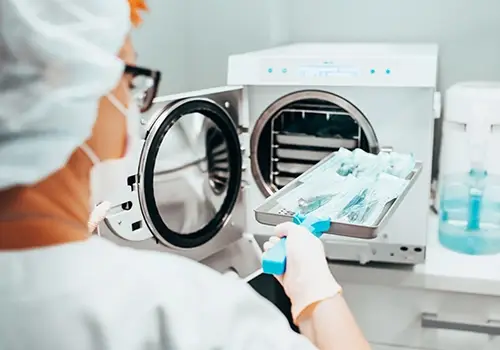
These devices are typically non-invasive, e.g., a blood pressure cuff, and rarely associated with disease.
Semi-critical reusable medical devices come in contact with intact mucosal membranes or nonintact skin, but do not usually penetrate blood barrier. Examples include endotracheal and aspirator tubes. If not properly cleaned, they can be associated with disease, so are subject to a higher standard of processing.
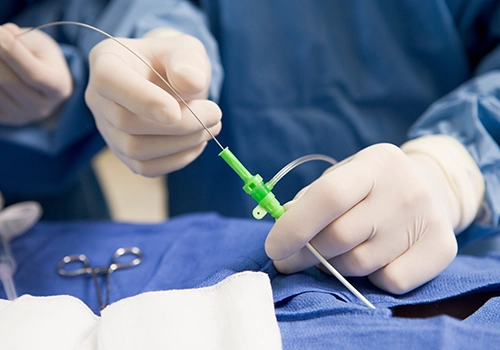
Critical devices pose the highest risk of infection as they come into direct contact with the blood stream or other sterile fluid pathways. Examples include surgical devices and cardiac catheters.
Pace® Water Testing Services for ST108 Compliance
Adherence to the ST108 standard for reusable medical devices requires three types of tests: biological contaminant testing, performance qualification testing, and basic water chemistry.
Pace® provides complete water testing services for compliance with the biological testing requirement under ST108. This includes both endotoxin and bacterial testing.
Basic water chemistry includes pH, conductivity, total alkalinity, and total hardness. Many facilities perform these tests on site, but Pace® water testing laboratories can provide testing to confirm results.
Under ST108, water chemistry testing is required for performance qualification to validate equipment, systems, and processes. Pace® water laboratories provide all required water chemistry tests including:
- Total Organic Carbon (TOC)
- Aluminum
- Copper
- Chloride
- Iron
- Manganese
- Nitrate
- Phosphate
- Silicate (Silicon)
- Sulfate
- Zinc
AAMI ST108 Water Testing Requirements
Under AAMI ST108, water testing requirements are defined by the type of water and how it will be used.
Utility water, critical water, and steam systems must undergo an initial performance qualification that looks at both chemical and biological contaminants. Water quality criteria include pH, conductivity, total alkalinity, total hardness, bacteria (HPC), and endotoxin (LAL).
Endotoxin testing is not required for utility water or steam. In addition, bacteria testing is not required for steam. Utility water and steam are also not required to undergo testing for total organic carbon (TOC). Otherwise, all three water categories must be initially tested for the following chemical compounds:
- Total Organic Carbon (TOC)
- Aluminum
- Chloride
- Copper
- Iron
- Manganese
- Nitrate
- Phosphate
- Silicate
- Sulfate
- Zinc
“Water Generation” refers to the water systems used to produce the water used to clean and/or sterilize reusable medical devices. These systems must undergo routine testing based on the intended use of the water generated. Note that steam is not considered in this category of routine testing. In addition, routine testing for individual ions and TOC are not required.
Utility Water - Must undergo quarterly testing for pH, conductivity, total alkalinity, and total hardness.
Critical Water – Must undergo monthly testing for pH, total alkalinity, total hardness, bacteria (HPC), and endotoxins (LAL). Critical Water must also undergo daily testing for conductivity, though this can be performed using an inline or in-tank meter.
Water at the point of use must also undergo routine testing. Once again, what gets tested and at what frequency is determined by how the water us being used.
Utility Water – Must undergo quarterly testing for pH, conductivity, total alkalinity, total hardness, and bacteria (HPC).
Critical Water - Must undergo monthly testing for pH, conductivity, total alkalinity, total hardness, bacteria (HPC), and endotoxins (LAL).
Steam – Must undergo quarterly testing for pH, conductivity, total alkalinity, and total hardness.
Water Categories Tested Under AAMI ST108
AAMI ST108 defines utility water as the type of water that comes directly from the tap. It is suitable for various general cleaning tasks, such as flushing, washing, and rinsing medical devices. To ensure patient safety, utility water must meet specific chemical water quality criteria. Thus, this water may require further treatment depending on its intended use.
Critical Water is primarily used for final rinses of critical and semi-critical medical devices after chemical sterilization. This type of water is treated to a higher standard for chemical constituents and must be tested for bacteria and endotoxins.
Steam is typically used in the last stage of processing reusable medical devices for sterilization. The condensate is tested and must typically meet the same quality criteria as Critical Water.
Download our info sheet
to learn more about
Water Management Planning
AAMI recommends including water quality management professionals on your ST108-compliance team. Pace® has been providing water quality testing services and guidance to healthcare organizations and other professionals for more than three decades. We are experts in testing for organic and inorganic contaminants as well as waterborne pathogens in potable and non-potable water. Over the years, our experts have helped numerous facilities adhere to such critical standards as ASHRAE 188 and those recommended by the Joint Commission, the Centers for Medicare & Medicaid Services (CMS), and AAMI.
Put Pace® on Your AAMI ST108 Team
AAMI recommends including water quality management professionals on your ST108-compliance team. Pace® has been providing water quality testing services and guidance to healthcare organizations and other professionals for more than three decades. We are experts in testing for organic and inorganic contaminants as well as waterborne pathogens in potable and non-potable water. Over the years, our experts have helped numerous facilities adhere to such critical standards as ASHRAE 188 and those recommended by the Joint Commission, the Centers for Medicare & Medicaid Services (CMS), and AAMI.
Additional Resources
Infographic: ST108 Water Testing Requirements Infographic
Info Sheet: ANSI/ASTM ST 108:2023
Info Sheet: Lead and Copper Testing Services
Info Sheet: Water Management Planning
Info Sheet: Water Infection Control Risk Assessment (WICRA)
Info Sheet: Assessing Your Legionella Risk
Pace® is proud to announce our ST 108 integrated LAMPS resulting. Learn More.
On-Demand Webinar: Ensuring Patient Safety: Water Management Strategies in Healthcare