
Asbestos Testing for Air, Bulk, Soil, Dust and Water
Pace® provides asbestos testing for air, water, soil, dust and bulk building materials. Our asbestos laboratory identifies and quantifies all six regulated asbestos minerals, chrysotile, amosite, crocidolite, anthophyllite, tremolite and actinolite, using polarized light microscopy, phase contrast microscopy and transmission electron microscopy. We also test for non-regulated amphiboles, naturally occurring asbestos and asbestiform talc in consumer products. Samples are handled under documented chain of custody and reported to the standards your regulator, contractor or building owner requires.
Our asbestos laboratory identifies and isolates all six regulated asbestos forms in bulk materials and soils, including:
- Chrysotile (white)
- Amosite (brown)
- Crocidolite (blue)
- Fibrous Anthophyllite
- Fibrous Tremolite
- Fibrous Actinolite
Health Hazards of Asbestos Exposure
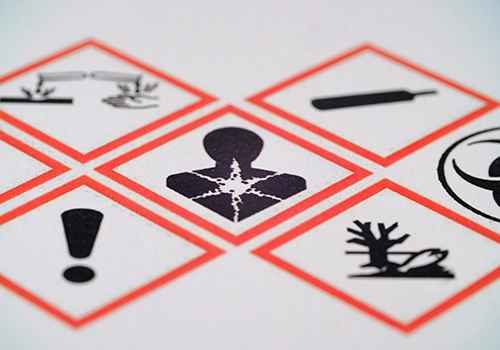
When asbestos-containing materials are disturbed—such as during maintenance, repairs, remodeling, or demolition—tiny fibers can become airborne and pose a serious inhalation risk. Exposure to these fibers is a well-known health hazard and is regulated by agencies like OSHA and the EPA. Inhalation can lead to serious diseases, including asbestosis (lung scarring), lung cancer, and mesothelioma—a rare and often fatal cancer affecting the lining of the lungs or abdomen. Research shows that all forms of asbestos, including chrysotile, can be harmful.
Asbestos Testing Methods: PLM, PCM & TEM
Pace® identifies asbestos using three methods: polarized light microscopy (PLM) for bulk building materials, phase contrast microscopy (PCM) for air clearance monitoring, and transmission electron microscopy (TEM) for soil, dust, water, consumer products and contested results.
Polarized light microscopy (PLM) is the standard method for identifying asbestos in bulk building materials. Analysts identify fibers by their characteristic refractive indices using index-matching liquids.
Phase contrast microscopy (PCM) is used for air filter samples, most often for clearance monitoring before, during and after abatement. PCM counts total fibers against the regulatory limit of 0.01 fibers per cubic centimeter. PCM does not distinguish asbestos fibers from non-asbestos fibers, which is why TEM confirmation is requested on contested results.
Transmission electron microscopy (TEM) identifies asbestos by fiber morphology, elemental composition and crystal structure at once, using an energy-dispersive X-ray detector and electron diffraction. TEM resolves fibers too fine for PLM or PCM and is the method used for AHERA school clearance.

Who Needs Asbestos Testing
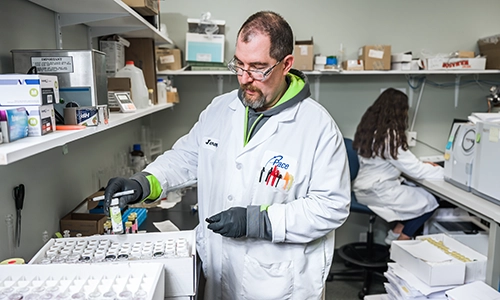
Asbestos testing is requested by environmental consultants and industrial hygienists managing building surveys, abatement contractors documenting clearance, school districts meeting AHERA inspection and re-inspection requirements, property owners and managers assessing buildings before renovation or demolition, and manufacturers screening talc-containing consumer products.
Asbestos Test Reports and Turnaround
Results are reported with the method, the analyst, the detection limit and the analytical date on every sample. Chain of custody documentation accompanies every report. Turnaround depends on the analysis method, the sample type and current laboratory capacity. To confirm available turnaround times before you ship, contact our Client Management team at: BSCIClientManagement@pacelabs.com.
Asbestos Regulations: AHERA, ASHARA, Clean Air Act and SDWA
A wide range of state and federal regulations covers asbestos to protect public health and prevent asbestos related diseases. You can find many of the primary programs listed below.

AHERA is part of the Toxic Substance Control Act. It requires the EPA to make rules for local schools. Schools must inspect their buildings for asbestos.
They also need to create plans to manage asbestos. Finally, they must take steps to reduce or prevent asbestos hazards. Under AHERA, the EPA created a model for states. This model helps states accredit people who inspect asbestos and carry out corrective actions in schools.
ASHRA has extended funding for the asbestos removal loan and grant program in schools. They also enforced the EPA to expand accreditation requirements. This includes asbestos removal projects in all public and commercial buildings, including schools. Additionally, they increased the number of training hours needed for the Asbestos Model Accreditation Plan (MAP).
The CAA defines the EPA's responsibilities for protecting and improving the nation's air quality. This law includes provisions that allow the EPA to set national emission standards for hazardous air pollutants, including asbestos.
The SDWA allows the EPA to create National Primary Drinking Water Regulations (NPDWR). It also enforces maximum contaminant limits (MCLs) for drinking water. The chemical contaminants rules regulate over 65 contaminants, including asbestos. When asbestos levels go above the EPA's safe limit, water suppliers must inform customers within 30 days.
CERCLA, also known as Superfund, aims to fix problems from sudden releases and past mistakes in handling hazardous waste. CERCLA manages the cleanup of abandoned hazardous waste sites. It also covers accidents, spills, and other emergency releases into the environment. This includes the release or possible release of asbestos.
The asbestos NESHAP rules outline the work practices for demolishing or renovating structures and buildings. This does not include residential buildings with four or fewer units.
The building owner or operator must inform the right state agency before any demolition or renovation. This is important for buildings that may have asbestos or materials that contain asbestos. Certain manufacturing and fabricating operations must avoid emitting visible emissions into the outside air or follow air cleaning procedures. Asbestos-containing waste removal also has specific requirements.
OSHA sets and enforces protective workplace safety and health standards. OSHA has promulgated regulations that establish permissible exposure limits (PEL) for air in the workplace.
The CPSC does not have specific rules about asbestos in consumer products. However, their mission is to protect the public from unreasonable risks of injury or death from these products. The CPSC's role in regulating asbestos is mainly to monitor risks. They also work with other agencies to protect the public from asbestos exposure.
MSHA is in charge of keeping miners safe and healthy in the U.S. To do this, MSHA has set rules about asbestos exposure limits. They also have guidelines for engineering controls and respiratory protection for workers, especially in surface mines. Additionally, MSHA has been proactive in augmenting protections for miners exposed to asbestos. Lastly, MSHA also looks into the potential exposure of miners to asbestos in commercial products found at a mine.
Which Asbestos Test Do You Need?
Testing a suspected asbestos-containing building material, such as flooring, insulation, cement or joint compound, calls for PLM on a bulk sample.
Monitoring or clearing air during and after an abatement project calls for PCM, with TEM confirmation where the clearance standard or the project specification requires it.
Testing soil, dust, water or a consumer product, or resolving a contested PCM result, calls for TEM.
If you are not sure which applies, contact our asbestos team before you sample. Sampling correctly the first time is cheaper than re-sampling.

Ready to Send a Sample?
Download the Pace® asbestos chain of custody form, or contact our asbestos team to set up an account.
Additional Asbestos Testing Resources
Need to find a lab that can handle your unique requirements?
Contact us directly or download our list of environmental certifications across our network.
eBook: Asbestos "The Invisible Enemy"
SOQ: Building Sciences Statement of Qualifications (SOQ)
Info Sheet: Asbestos in Settled Dust
Info Sheet: Asbestos Testing
On-Demand Webinar: Asbestos in Settled Dust