
Pace® At The Forefront In Dioxins And Furans Testing Services
Pace® is at the forefront of dioxins/furans testing, having served the evolving dioxin testing market for many years. Our highly skilled scientific staff employs the latest instrumentation and adheres to United States Environmental Protection Agency (EPA) methodologies to conduct dioxins/furans and dioxin-like compounds testing on any matrix. Here are some ways we have established ourselves as leaders in the field of dioxin/furan testing services.
- Member of the inaugural class of labs to receive NELAP accreditation and maintain an on-going collaborative relationship with the organization.
- ISO 17025 Certified to meet the stringent requirements of the European Union for laboratories accredited to test food and animal feed for dioxins/furans and/or PCB Congeners.
- Department of Defense Quality Systems Manual version 5.3 accreditation
- Certified to perform work in every state with a formal Dioxin Testing Certifications Program
- Matrices including food, animal feed, and stack emissions
- Analysis of emerging dioxin-like compounds
- Data of unparalleled defensibility for high-importance litigation and remediation projects
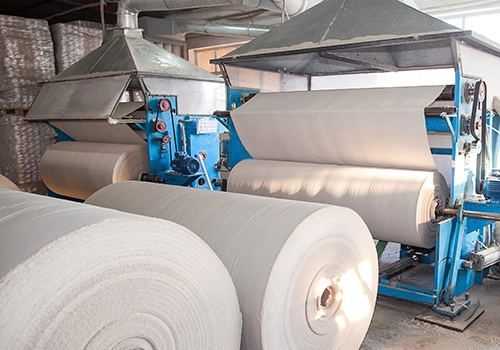
Dioxins and furans, otherwise known as polychlorinated dibenzo-p-dioxins and polychlorinated dibenzofurans, are a group of primarily anthropogenic chemical compounds created as an unintended byproduct of several human activities including combustion, certain types of chemical manufacture, chlorine bleaching of paper, and other industrial processes. They can be found in air, water, and soil, are difficult to remediate, and can remain in the environment for an extended period. Therefore, it is crucial to address them during site assessment and cleanup.
Dioxins and furans are byproducts that are generated unintentionally during various processes, including the production of herbicides, as well as in the pulp and paper industry during the bleaching of wood pulp. Burning of products can also lead to their formation. They do not serve any useful purpose in themselves.
Consuming contaminated food is the primary source of exposure to dioxins and furans. These harmful substances tend to accumulate in the fatty tissues of animals, meaning that beef, pork, poultry, fish, and dairy products can all be sources of exposure.
There are several ways in which dioxins and furans can be encountered in the environment, including working in or near municipal solid waste incinerators, copper smelters, cement kilns, or coal-fired power plants. Burning household waste or wood can also lead to exposure, and even forest fires can produce small amounts of these substances.
Dioxins and furans have been detected in the air, soil, and food, with airborne transmission being the primary distribution method, albeit accounting for a relatively small percentage of exposure.
Dioxins and furans are persistent organic pollutants that do not break down in the environment and can bioaccumulate in the food chain. Due to their ability to accumulate in biological tissues, these compounds have been a focus of environmental concerns for many years and are currently under the scrutiny of the global food community.
Among the 210 dioxins and furans, 2,3,7,8-tetrachlorodibenzo-p-dioxin (TCDD) is the most toxic synthetic substance and one of the most toxic naturally occurring compound known to man. Therefore, its high acute toxicity is a significant concern that cannot be ignored.
DIOXIN-LIKE COMPOUNDS ANALYSIS: PCBs AND PBDEs
Research conducted by the EPA and the World Health Organization (WHO) has identified compounds similar in nature to dioxin, which appear to pose similar risks to both animals and humans.
POLYCHLORINATED BIPHENYLS (PCBs)
PCB congeners share a similar chemical structure with dioxins and furans, differing primarily by the absence of an additional oxygen atom. They were manufactured and widely used for industrial applications from the early 1900s through the mid‑1970s. PCBs were banned from most public uses globally and have been strictly regulated in the United States since 1978.
Toxic Equivalency (TEQ)
The World Health Organization has identified 12 PCB congeners as the most toxic. These dioxin‑like PCBs are included, along with the 17 toxic dioxin and furan congeners, in calculating a Toxic Equivalency (TEQ), which is used to assess potential health risk. Learn more about PCBs here.
How Are Dioxins/Furans Regulated?
Dioxins are covered by a wide range of state and federal regulations. Below is a list of the primary federal programs.
CERCLA, also known as Superfund, gives the EPA broad authority to respond directly to actual or threatened releases of hazardous substances. CERCLA:
- Established strict prohibitions and regulatory requirements for managing closed and abandoned hazardous waste sites.
- Imposed liability on parties responsible for the release of hazardous waste at these sites.
- Created a dedicated trust fund to finance cleanup activities when no responsible party can be identified.
Toxicity Equivalence Factors (TEFs) are used to evaluate the toxicity of environmental contaminants. These contaminants, such as 2,3,7,8-tetrachlorodibenzo-p-dioxin (TCDD) and dioxin-like compounds (DLCs), are typically found in mixtures including polychlorinated dibenzo-p-dioxins (PCDDs), polychlorinated dibenzofurans (PCDFs), and dioxin-like polychlorinated biphenyls (PCBs). When the toxicity values for DLCs are unknown, their toxicity can be assessed by comparing them to TCDD. The EPA recommends using updated TEFs to evaluate the potential risks to human health from exposure to dioxin-like compounds.
Toxic Equivalency (TEQ) represents a weighted measure that accounts for the relative toxicity of individual dioxin and dioxin-like compounds compared to the most toxic reference compound in the group, typically 2,3,7,8-TCDD. The EPA applies Toxic Equivalency (TEQ) values to normalize differences in toxicity among dioxin and dioxin-like compounds. By expressing releases and waste management data in TEQs, the agency provides a standardized metric that enables the public to better interpret the relative toxicity of emissions reported under the Toxics Release Inventory (TRI) Program.
Enacted in 1976, RCRA governs the disposal of solid and hazardous waste. Under the Resource Conservation and Recovery Act (RCRA) certain wastes containing chlorinated dioxins, -dibenzofurans, and -phenols are listed as acute hazardous wastes.
Hazardous air pollutants have been linked to cancer and other severe health issues. To regulate toxic air pollutants, also known as air toxics, the Clean Air Act mandates action by the EPA. Among the 30 hazardous air pollutants identified by the EPA, dioxins are a group that pose a significant health risk in urban areas.
The Toxic Substances Control Act of 1976 provides the EPA with authority to require reporting, record-keeping, toxicity testing, and restrictions relating to chemical substances and/or mixtures.
In 1974, the SDWA was created to give the EPA the authority to develop the National Primary Drinking Water Regulations (NPDWR). According to the SDWA, a Maximum Contaminant Level (MCL) of 0.00000003 mg/L has been established for dioxin (2,3,7,8-TCDD) in drinking water.
While not currently regulated, the U.S. Food and Drug Administration (FDA) recommends not eating fish and shellfish with more than 50 parts per trillion (50 ppt) of 2,3,7,8-TCDD.

Test Methods
Test Method | Description | Instrumentation |
|---|---|---|
EPA Method 1613 | Tetra- through Octa-Chlorinated Dioxins and Furans by Isotope Dilution | “High Resolution Capillary Column Gas Chromatography/High Resolution Mass Spectrometry (HRGC/HRMS)” |
EPA Method 1668 | Chlorinated Biphenyl Congeners in Water, Soil, Sediment, Biosolids, and Tissue | “High Resolution Capillary Column Gas Chromatography/High Resolution Mass Spectrometry (HRGC/HRMS)” |
EPA Method 1668 | TMDL Chlorinated Biphenyl Congeners in Water, Soil, Sediment, Biosolids, and Tissue | “High Resolution Capillary Column Gas Chromatography/High Resolution Mass Spectrometry (HRGC/HRMS)” |
EPA Method 8280M | Polychlorinated Dibenzo-p-Dioxins and Dibenzofurans | High Resolution Gas Chromatography/High Resolution Mass Spectrometry (HRGC/HRMS) |
EPA Method 8290 (SW-846 | Polychlorinated Dibenzodioxins (PCDDs) and Polychlorinated Dibenzofurans (PCDFs) | High-Resolution Gas Chromatography/High Resolution Mass Spectrometry (HRGC/HRMS) |
EPA TO-9 | Determination Of Polychlorinated, Polybrominated And Brominated/Chlorinated Dibenzo-p-Dioxins And Dibenzofurans In Ambient Air | High-Resolution Gas Chromatography/High Resolution Mass Spectrometry (HRGC/HRMS) |
EPA Method 23 | Determination of Polychlorinated Dibenzo-p-Dioxins, Polychlorinated Dibenzofurans, Polychlorinated Biphenyls, and Polycyclic Aromatic Hydrocarbons from Stationary Sources | High-Resolution Gas Chromatography/High Resolution Mass Spectrometry (HRGC/HRMS) |
Dioxin PCB Wipe Sampling | Collection of Wipe Samples for the Determination of Polychlorinated Dibenzo-p-Dioxins, Dibenzofurans, and PCB Congeners N/A | N/A |
Additional Resources
Pace® holds DOD certification for Dioxins/Furans & PCBs and is NEFLAC and ISO 17025 certified. In addition, Pace® also holds certifications for states that require air laboratory certification.