
PFAS Testing for Water, Soil, Leachate and AFFF
Pace® provides PFAS testing for drinking water, wastewater, groundwater, landfill leachate, aqueous film-forming foam (AFFF), soil, biota and other aqueous and solid matrices. Pace® has been an EPA-approved laboratory for every Unregulated Contaminant Monitoring Rule (UCMR) cycle to date, including PFAS monitoring under UCMR 3 and UCMR 5, and is preparing to support utilities through UCMR 6. Pace® is certified in every state that operates a PFAS laboratory certification program. Reporting limits are set at or below program requirements, and Pace® participated in both single-laboratory and multi-laboratory validation studies of EPA PFAS and organofluorine test methods. Rapid turnaround is available for every matrix.
Additionally, our experts help our customers protect the environment and their communities. Pace® works with the United States Environmental Protection Agency (EPA) and other groups. Together, we advance the science of PFAS testing and analysis.
Highlights of our PFAS testing capabilities and credentials include:
- PFAS testing for a wide range of aqueous and solid materials, including PFAS in drinking water, wastewater, landfill leachate, AFFF/F3, soil, biota, and more
- Certified in every state with a PFAS laboratory certification program
- Drinking Water Centers of Excellence across the U.S.
- UCMR 6 support, plus EPA approval for PFAS under UCMR 3 and UCMR 5
- Reporting limits at or below all program requirements
- Analysis of special compounds, including ultrashort-chain PFAS
- Participated in both single and multi-lab validation studies of EPA PFAS and organofluorine test methods
- Ultrashort-chain PFAS testing using EPA 563 for drinking water and a direct-inject LC MS/MS method for more complex aqueous samples
PFAS RAPID TURNAROUND TIME SERVICES
for every matrix.
Get the data you need, when you need it! Request a PFAS Testing Quote Now.

PFAS Test Methods: EPA 1633A, 537.1, 533 and 563
Pace® analyzes PFAS to the published EPA methods your program requires.
- EPA 537.1 covers 18 PFAS compounds in drinking water by solid phase extraction and LC-MS/MS. Along with EPA 533, it is approved for compliance monitoring under the Safe Drinking Water Act’s PFAS National Primary Drinking Water Regulation.
- EPA 533 covers 25 PFAS compounds in drinking water, including shorter-chain compounds not captured by 537.1, using isotope dilution.
- EPA 1633A covers 40+ PFAS compounds across non-potable matrices, including wastewater, surface water, groundwater, soil, biosolids, sediment, landfill leachate and tissue.
- EPA 563 covers seven ultrashort-chain organofluorine compounds, including ultrashort-chain PFAS, in drinking water, and is one of the methods in EPA’s UCMR 6 proposal. For other aqueous samples, Pace® analyzes ultrashort-chain PFAS by a specialized direct-injection LC-MS/MS method.
Which method applies depends on your matrix and your regulatory program, not on preference. Contact the laboratory before you sample if the requirement is not specified in your permit or work plan.
What Are PFAS?
Per- and polyfluoroalkyl substances (PFAS) are a group of synthetic compounds valued for their resistance to heat, water, and oil, and used for decades in industrial and consumer products such as non-stick surfaces, textiles, firefighting foams, and plastics. PFAS are bioaccumulative, building up in the bloodstream and tissue, and studies have linked some PFAS compounds to health problems including chronic kidney disease, thyroid issues, low fertility rates, and some cancers.

Which PFAS Test Method Do I Need?
The right method depends on what you are testing:
- EPA 537.1 or 533: Drinking water compliance testing
- EPA 1633A: Wastewater, groundwater, soil, biosolids, leachate, and tissue
- EPA 563: Ultrashort-chain PFAS in drinking water
PFAS Regulations: SDWA, NPDWR, CCL and UCMR 6
PFAS are regulated in the United States through a combination of federal laws and state programs. At the federal level, EPA addresses PFAS in drinking water under the Safe Drinking Water Act (SDWA), in wastewater discharges under the Clean Water Act, at contaminated sites under CERCLA (Superfund), in waste management under RCRA, and in chemical manufacturing and reporting under the Toxic Substances Control Act (TSCA) and the Toxics Release Inventory (TRI). Many states also set their own PFAS standards for drinking water, groundwater, wastewater, biosolids and consumer products, and some are stricter than federal requirements. Download our Industry Guide to PFAS Testing and Regulations.
The programs below are the federal regulations most likely to determine whether, where and how you need to test for PFAS.
The Safe Drinking Water Act (SDWA), enacted in 1974, is the federal law that protects the quality of public drinking water in the United States. It authorizes EPA to set enforceable National Primary Drinking Water Regulations, including the PFAS NPDWR, and requires EPA to identify and track emerging contaminants through the Contaminant Candidate List (CCL) and the Unregulated Contaminant Monitoring Rule (UCMR).
The SDWA applies to public water systems. Private wells are not covered, so private well owners are responsible for their own testing. For contaminants without enforceable standards, EPA can issue health advisories. These non-enforceable guidance levels identify concentrations in drinking water below which adverse health effects are not expected over a set exposure period. States often use them to inform their own PFAS standards and guidance.
In April 2024, EPA finalized the first enforceable national drinking water standards for PFAS under the Safe Drinking Water Act. The rule set maximum contaminant levels (MCLs) of 4 parts per trillion (ppt) each for PFOA and PFOS, along with limits for PFHxS, PFNA, HFPO-DA (GenX chemicals) and a hazard index mixture that includes PFBS.
In May 2026, EPA proposed rescinding the standards for PFHxS, PFNA, HFPO-DA and the hazard index mixture, keeping the PFOA and PFOS limits, and giving qualifying water systems until 2031, rather than 2029, to meet them. PFOS compliance deadline from 2029 to 2031. Until those proposals are finalized, the 2024 rule remains in effect. Compliance monitoring uses EPA Method 537.1 or 533.
The CCL is a list of contaminants. To be noted, these are not currently covered by any national drinking water rules.
However, they are known or expected to be found in public water systems. Therefore, the Safe Drinking Water Act (SDWA) requires the EPA to publish a new CCL every five years. This list often provides insights into which compounds the EPA is considering for future rulemaking. EPA’s draft CCL 6 includes PFAS as a group, using the same structural definition of PFAS used in CCL 5.”
The United States Environmental Protection Agency’s (EPA) Unregulated Contaminant Monitoring Rule (UCMR) is designed to collect data on contaminants suspected to be present in drinking water but that do not yet have health-based standards set under the Safe Drinking Water Act (SDWA). A revised list of up to 30 contaminants is selected every five years. UCMR 6 is the sixth UCMR round to be implemented and is proposed to include testing requirements for Ultrashort-Chain PFAS/Organofluorine Compounds, Pesticides, Semi-VOCs, and VOCs.
CERCLA, or Superfund, allows the EPA to act quickly when hazardous substances are released or may be released. Following, the EPA intends to classify certain PFAS as hazardous substances under CERCLA. Once this happens, CERCLA gives the EPA the power to respond directly. Consequently, this includes issuing cleanup orders for any release or existing contamination.
The EPA describes ELGs (Effluent Limitations Guidelines) as national rules. Consequently, these rules rely on technology. They aim to control industrial wastewater that enters surface waters and public treatment plants.
Moreover, ELG Plan 15 calls for setting PFAS limits on wastewater discharges from landfills (including leachate). Once set, these will be the first ELGs for PFAS. Furthermore, the plan also calls for more studies on PFAS discharges from other sources.
The Clean Water Act (CWA) created the NPDES program in 1972. It regulates the discharge of pollutants into U.S. waters (WOTUS). Additionally, States can petition the EPA to administer their own NPDES program, and most states have received partial or full approval. Also, authorities authorize Tribal Lands separately.
Notably, four states, NH, NM, MD, and MA, as well as most U.S. territories continue to rely on the EPA for NPDES permitting. Therefore, in 2022, the EPA gave guidance that strongly encouraged adding PFAS limits in permits for wastewater and biosolids discharge.
Enacted in 1976, RCRA governs the disposal of solid and hazardous waste. Therefore, designating PFAS as a hazardous substance under CERCLA gives the EPA the power to require cleanup.
However, designating PFAS as hazardous under RCRA gives the EPA much more control. This includes control over the entire lifecycle of PFAS: manufacturing, transportation, treatment, storage, and disposal. In particular, listing PFAS under RCRA would also automatically designate it as a hazardous substance under CERCLA.
The TSCA forms the basis for the EPA's significant new use rule. In return, it gives the agency the power to approve or reject new uses for dangerous chemicals, including PFAS.
Additionally, authorities may issue Low-Volume Exemptions (LVEs) for PFAS imported or manufactured in low quantities. Therefore, the EPA plans to review past LVE decisions. They want companies to voluntarily give up their past exemptions.
The EPA toxicity assessments explain the adverse health effects of certain chemicals. They also show the exposure levels where these effects might happen. Furthermore, the EPA, federal agencies, state regulators, and local communities can use these assessments. Importantly, they help decide when to address possible health risks.
The Toxics Release Inventory (TRI) was created in 1986 under the Emergency Planning and Community Right-to-Know Act (EPCRA) and is administered by EPA. It requires certain industrial facilities to report each year how much of each listed toxic chemical they release into the environment or otherwise manage as waste. The National Defense Authorization Act for Fiscal Year 2020 added PFAS to the TRI list beginning with reporting year 2020, and EPA has added more PFAS since. In 2023, EPA also designated PFAS as chemicals of special concern, which eliminated the exemption that had let facilities skip reporting PFAS present in products at very low concentrations.
The TSCA grants the EPA the authority to establish reporting, record-keeping, and testing requirements for chemical compounds. Also, the EPA has the power from the TSCA. They expect PFAS manufacturers to pay for PFAS toxicity studies. Therefore, the EPA has started giving testing orders to the industry.

Pace® Regulatory Consultants can help you navigate
EPA reporting and recordkeeping requirements.
Pace® PFAS Treatability Studies
Our Pace® PFAS Treatability Studies help clients evaluate the effectiveness of technologies and strategies for PFAS removal, remediation, and destruction.
By conducting a Treatability Study, environmental engineers and scientists can optimize remediation strategies, ensure regulatory compliance, and build public trust.
Matrices We Test for PFAS
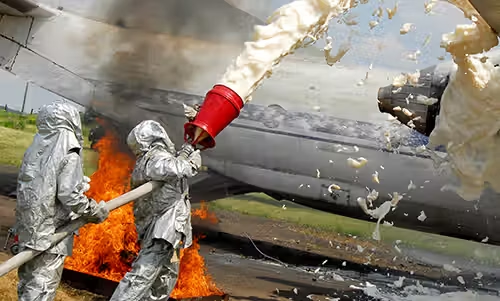
Legacy AFFF, the Class B firefighting foam used to fight chemical fires, typically contains PFAS. To be noted, newer fluorine-free foams (F3) are not always PFAS-free either. With this purpose, Pace® keeps communities safe. We offer testing services for AFFF, F3, and materials that may experience effects. To be noted, this includes soil, surface water, and groundwater.
PFAS can become airborne in multiple ways. For example, waste incineration, stack emissions, and leachate evaporation. Once PFAS is airborne, it can contaminate surrounding communities. As a result, impacting soil, groundwater, surface water, and private drinking water wells.
PFAS has been discovered in milk, eggs, deer, fish, and more. When humans consume these products, PFAS can build up in their bloodstream. Consequently, testing for PFAS in living things can be hard. However, Pace® has invested in the tools and knowledge to help our customers.
Notably, Pace® has developed several proven approaches for PFAS testing of consumer and industrial products.
Pace® tests drinking water for PFAS compliance under the National Primary Drinking Water Regulation using EPA Methods 537.1 and 533. Pace® is also preparing to support public water systems through UCMR 6, EPA’s next round of nationwide drinking water monitoring.
Many communities get their drinking water from underground aquifers or surface water. For example, rivers, lakes, and reservoirs. Pace® provides PFAS water testing services to analyze PFAS in non-drinking water. This helps local governments and industries with cleanup and control efforts.
The EPA found PFAS in 95% of the landfill leachate they tested. As a result, Leachate is likely a source of the contamination. Accordingly, Pace® provides leachate testing services for municipal, industrial, and private landfill operators.
Soil and sediment can become contaminated with PFAS from landfill leachate, wastewater discharge, biosolids, stormwater runoff, and more. With this in mind, Pace® offers PFAS testing for soil, sediment, and other solids. Additionally, this includes incinerator ash, which can spread PFAS to nearby neighborhoods.
Traditional wastewater treatment does not remove PFAS and can convert PFAS precursors into terminal PFAS. Therefore, biosolids produced from contaminated wastewater often contain PFAS as well. Pace® provides testing services for wastewater influent and effluent, stormwater runoff, and biosolids.
Who Needs PFAS Testing
PFAS testing is typically requested by:
- Public water systems and municipalities meeting NPDWR, UCMR 6, and state monitoring requirements
- Environmental consultants and engineers conducting site investigations and remediation
- Landfill operators characterizing leachate, groundwater, and monitoring wells
- Wastewater treatment operators characterizing influent and effluent
- Airports and fire training facilities assessing aqueous film-forming foam (AFFF) impacts
- Manufacturers screening products and wastewater discharge
PFAS Reports and Turnaround
PFAS reports identify the method, the analyte list, the analytical date and the reporting limit for every compound, at limits set to meet or beat your program requirement. Sampling containers and PFAS-free field supplies ship from the laboratory before your sampling event, since PFAS sampling is unusually sensitive to cross-contamination from ordinary field equipment. Rapid turnaround is available for every matrix. Contact the laboratory to confirm turnaround before you sample. Download the PFAS chain of custody form before your sampling event so your samples arrive with complete documentation.

Additional PFAS Testing Resources
Need to find a lab that can handle your unique requirements?
Contact us directly or download our list of environmental certifications across our network.
On-Demand Webinar: US EPA UCMR 6 Proposal Issued – What’s Next
On-Demand Webinar: Navigating the Complexities of Testing for PFAS in Plant and Animal Tissue
On-Demand Webinar: Quantifying PFAS in Consumer and Related Products: The Latest Developments
On-Demand Webinar: Biosolids Analysis for PFAS: Challenges, Considerations, and Options
On-Demand Webinar: Is PFAS Sample Cross-contamination Caused By Sampling?
On-Demand Webinar: EPA PFAS Test Methods Are Now Final, What That Means for Wastewater and Solid Waste Professionals
On-Demand Webinar: US EPA Information Collection Rule (ICR) Proposal for PFAS and NPDES