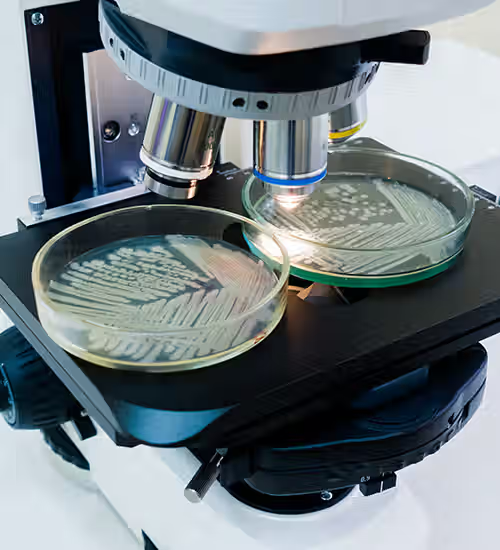
MICA Legionella Testing: Faster Answers for Critical Decisions
MICA (Microcolony Counter Analysis) is a culture-based method for detecting and counting Legionella pneumophila in water samples and swabs. Often used alongside standard culture methods, MICA offers significant benefits for Legionella management and control, including:
- Faster results: Culture-based results in 3 business days, compared with 7 to 10 days for traditional culture.
- Culturable bacteria counts: Unlike qPCR, which can't tell living cells from dead ones, MICA counts only culturable L. pneumophila.
- Familiar units: Results are reported in CFU/mL, consistent with culture-based action levels.
- Clearer results in challenging samples: MICA detects Legionella colonies before faster-growing background bacteria can overgrow them, which makes it well suited to cooling towers and other non-potable systems.
- AI-powered accuracy: Automated imaging and AI colony recognition deliver consistent, objective counts.
- Validated Method: MICA received AOAC PTM certification #032201 against ISO11731:2017 for enumeration of Legionella pneumophila in sanitary and cooling tower waters.
When to Use MICA for Legionella Testing
MICA® testing fits into every stage of water management planning, from confirming that a system is under control to responding when an outbreak is suspected.
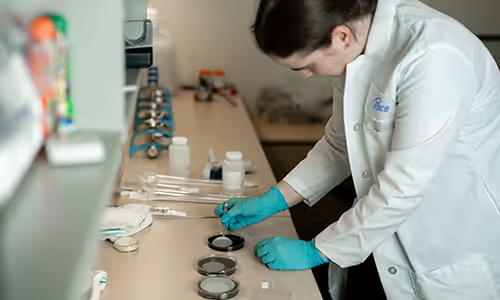
Regular testing shows whether your water management program is keeping Legionella in check. It matters most when a system is under control. Pairing MICA with scheduled culture testing gives you an early look at live L. pneumophila levels, so you can spot changes and adjust treatment sooner. This is especially useful for water treaters managing multiple sites and for facilities such as data centers, hotels, and apartment complexes that depend on uninterrupted water systems.
When a Legionnaires' disease case is linked to a facility, investigators need to find potential sources quickly. qPCR is often used as a rapid screen, but it can't tell living bacteria from dead ones. MICA provides fast, culture-based detection of live L. pneumophila, helping narrow down likely sources while full culture results and serogroup identification are pending.
After a positive result, systems and equipment often stay offline until follow-up testing shows remediation was effective. With culture-based results in 3 business days, MICA helps you confirm that treatment worked so you can bring cooling towers, hot tubs, fountains and other equipment back online sooner.
During an outbreak, cautionary response measures may require shutting down a wide range of suspected systems—disrupting operations, occupants, and public health protection efforts. By helping teams narrow the likely sources more quickly, MICA can support faster, evidence-based decisions and help impacted systems return to service sooner.
Learn more about Pace® Legionella Outbreak Response Services
AI-Powered Legionella Analysis
MICA pairs a specialized labeling chemistry with automated imaging and artificial intelligence. During 48 hours of incubation, culturable Legionella pneumophila metabolizes a modified sugar that makes its microcolonies glow under a fluorescent tag, long before they’re visible to the naked eye.
The MICA instrument then scans each sample, and AI software trained to recognize L. pneumophila identifies and counts colonies by size, shape, and fluorescence. The result is a consistent, objective count reported in CFU/mL, without manual plate reading.
MICA Legionella FAQs
Does MICA replace standard Legionella culture testing?
No. MICA is designed to be used alongside standard culture, not in place of it. MICA provides culture-based results in 3 business days for Legionella pneumophila, the species responsible for most cases of Legionnaires’ disease. Standard culture completes the picture by identifying all culturable Legionella species and serogroups present.
How is MICA different from qPCR testing for Legionella?
qPCR detects Legionella DNA, which can come from both living and dead bacteria, and reports results in genomic units. MICA is culture-based: it detects and counts culturable L. pneumophila and reports results in CFU/mL. That makes MICA results easier to compare with culture results and culture-based action levels.
Which Legionella species and serogroups does MICA detect?
MICA detects Legionella pneumophila, the species responsible for most cases of Legionnaires’ disease, across all serogroups. It doesn’t distinguish between serogroups or detect other Legionella species. Standard culture should be used when serogroup identification or detection of other species is needed.
Can MICA and culture testing be run on the same sample?
In most cases, yes. For potable water, a standard 250 mL sample typically provides enough volume for both culture and MICA. For non-potable water, 100 mL is typically enough for both. If you’re requesting additional tests on the same sample, such as qPCR, additional volume may be needed. Contact your Pace® representative to confirm sampling requirements for your project.
Can MICA testing be used for both potable and non-potable water?
Yes. MICA can be used on potable water samples, such as hot and cold water from building distribution systems, and on non-potable samples, such as cooling towers, evaporative condensers, and decorative fountains. Non-potable samples that may contain substantial background microbiological growth can interfere with conventional culture. By identifying L. pneumophila microcolonies at 48 hours and analyzing the full filtered sample, MICA helps preserve visibility into Legionella in these more challenging matrices.
Is MICA suitable for monitoring cooling towers for Legionella?
Yes. Cooling tower samples often contain high levels of background bacteria that can overgrow standard culture plates and hide Legionella colonies. MICA detects L. pneumophila microcolonies at 48 hours, before most competing bacteria take over. Because the entire portion of the filtered sample is analyzed, MICA can also provide a better detection limit for non-potable samples than standard culture. That makes it well suited to routine monitoring, post-treatment verification and investigations involving cooling towers.
What is viability qPCR?
Viability qPCR (viability quantitative polymerase chain reaction, or v-qPCR) is a molecular testing method designed to distinguish DNA from potentially living microorganisms from DNA left behind by dead cells. Unlike standard qPCR, it includes a sample-treatment step that reduces detection of DNA from cells with damaged membranes.
When comparing v-qPCR with MICA, the key distinction is between viability and culturability. Some cells may remain alive but be too stressed to grow under laboratory culture conditions—a state known as viable but nonculturable (VBNC). MICA detects Legionella pneumophila that grow into microcolonies over approximately 48 hours of incubation. MICA reports results in colony-forming units per per milliliter (CFU/mL), making it useful when water-management decisions depend on culture-based counts and action levels. Viability qPCR’s molecular measurements are not directly interchangeable with those counts.
Is MICA a certified or accredited Legionella test method?
MICA is an AOAC Performance Tested Method. It isn’t currently part of the CDC ELITE program or state accreditation programs, which is one reason Pace® recommends using it alongside standard culture performed by a qualified laboratory.
Can MICA results be used for Legionella regulatory compliance?
Requirements vary by jurisdiction and program. MICA is most often used as a rapid, culture-based early indicator alongside standard culture, which remains the method of record for most compliance reporting. Contact Pace® to discuss how MICA can fit into your testing program and regulatory requirements.

Who Benefits from MICA Legionella Testing?
MICA fits into water management programs for organizations that benefit from fast, culture-based L. pneumophila results, including:
- Water treatment professionals managing Legionella control across multiple sites
- Facility and building managers at data centers, hotels, apartment complexes, and other properties that depend on uninterrupted water systems
- Operators of non-potable water systems, including cooling towers, evaporative condensers, hot tubs, and decorative fountains
- Environmental consultants and industrial hygienists supporting water management programs and remediation projects
- Public health officials and investigators responding to Legionnaires’ disease cases and outbreaks
MICA Legionella Testing Turnaround Time and Reporting
MICA delivers rapid, culture-based L. pneumophila results in 3 business days, compared with 7 to 10 days for traditional culture. Microcolonies are detected after 48 hours of incubation and counted by AI imaging, so results are ready days sooner.
- Turnaround: 3 business days from sample receipt. Results are made available on our secure client portal.
- Reporting units: CFU/mL, so results line up with culture results and culture-based action levels
- What’s reported: Culturable L. pneumophila counts, with all serogroups combined. When both tests are ordered, standard culture results, including other species and serogroup identification, follow on the usual timeline.