
Legionella Testing for Building Water Systems
Pace® provides Legionella testing and analysis for building water systems, cooling towers, potable plumbing, hot water storage and process water. We run four test methods: Legionella ISO culture, Legionella CDC culture, Legionella qPCR and Legiolert. Pace® is an independent provider, unaffiliated with water treatment vendors, so results are not influenced by a remediation interest. Sampling kits ship nationwide and Pace® Legionella Emergency Response Services can manage every aspect of an outbreak response.
- In addition to being CDC Elite, many of the Pace® labs are ISO 17025 accredited.
- We offer numerous test methods, including Legionella ISO culture, Legionella CDC culture, Legionella qPCR, and Legiolert.
- Pace® is an independent provider of Legionella testing and analytical services. No need to worry about biased or incomplete results.
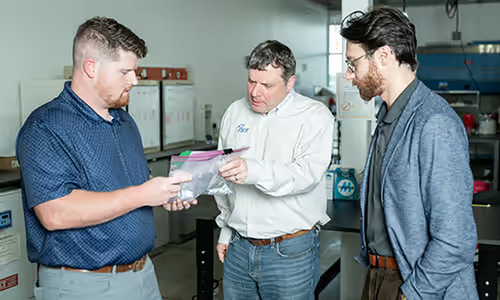
- Nationwide Legionella lab network and easy shipping kits help you send your samples to the lab safely.
- Our online store makes it simple to make sure you always have the right testing supplies on hand.
- Pace® Legionella Emergency Response Services can manage all aspects of a Legionella outbreak.
Protect your employees and customers from preventable diseases while mitigating your business risks with Pace® Legionella testing services.

Legionella Test Methods: ISO Culture, CDC Culture, qPCR and Legiolert
- Legionella ISO culture follows ISO 11731 and is the internationally recognized culture method for water samples. It produces a quantified count of viable Legionella and is the method most often specified in European and international water safety plans.
- Legionella CDC culture follows the CDC protocol and is performed in CDC ELITE certified laboratories. It is the method most often specified in US water management programs and in outbreak investigations, and it supports serogroup identification.
- Legionella qPCR detects Legionella DNA and returns results in hours rather than days. It detects both viable and non-viable organisms, which makes it well suited to rapid screening and to tracking a system during remediation, and it is generally confirmed by culture where a regulatory determination depends on the result.
- Legiolert is a rapid culture-based method producing a confirmed count of Legionella pneumophila in a defined incubation period, widely used for routine monitoring of building water systems.
Which Legionella Test Should You Use?
Suitable for | TAT* | Advantages | Disadvantages | |
|---|---|---|---|---|
Legionella ISO Culture | 7 days** |
Longer TAT required than all other methods. (Can be paired with qPCR to begin initial outbreak forensics.) | ||
Legionella CDC Culture | 7 days** | Longer TAT required than Legionella qPCR. (Can be paired with qPCR to begin initial outbreak forensics.) | ||
Legionella qPCR | 1-2 days | |||
Legiolert | Baseline testing and water management validation | 7 days |
* Turnaround time. All TATs quoted are industry standard. Some scenarios may allow for faster turnaround. Talk with your Pace® representative if faster results are needed.
** Regulatory requirements in some states, such as New York and Connecticut, may extend TAT times. Talk with your Pace® representative for details.

Why Test For Legionella
Legionella bacteria pose a serious health risk, especially in large plumbing systems and cooling towers where they can grow and spread. They can cause Legionnaires’ disease—a severe form of pneumonia—as well as Pontiac fever, a milder flu-like illness. Both can be dangerous, particularly for individuals with weakened immune systems.
Proactive Legionella testing helps prevent outbreaks, protect occupants, and ensure water systems are safe and compliant. With comprehensive testing and analysis, Pace® helps organizations detect risks early, safeguard public health, and maintain regulatory confidence.
Legionella Regulations: CMS, Joint Commission, OSHA and State Rules
Legionella testing in water systems is essential for protecting public health and reducing organizational risk. The Centers for Medicaid and Medicare Services (CMS) has rules for healthcare facilities.
Facilities that accept Medicare and Medicaid must implement water management policies. These policies help reduce the risk of Legionella and other harmful germs. In 2022, the Joint Commission set new standards for accredited organizations. This includes hospitals and nursing care centers to tackle Legionella.
Various states have their own requirements. New York requires hospitals and healthcare facilities to monitor and control Legionella.
Whereas, New Jersey needs policies for healthcare facilities and buildings with large water systems. The CDC provides guidelines for preventing Legionnaires’ disease. OSHA has standards for workplaces with potential Legionella contamination. States may also regulate other hot spots, such as New York’s requirement for cooling tower testing to reduce increased risk.
Many organizations, like those in healthcare, must have water management policies. These help reduce the risk of Legionella and other harmful germs. However, testing is not always required but can play an important role in validating compliance.
Even if the law does not require testing for Legionella, baseline testing can help ensure water safety. Therefore, water sample collecting is important for places like hotels and recreational facilities.
An outbreak of Legionnaires' disease linked to a company's facilities can harm its reputation. Therefore, could lead to lost business and other problems. Routine testing can help limit the risk of an outbreak. Therefore, if an outbreak does occur, testing can help identify the source.

Industries We Serve
Legionella testing is requested by healthcare facilities operating under CMS water management requirements and Joint Commission standards, hospitality and multifamily property operators, manufacturing and industrial sites with cooling towers, commercial building owners and facility managers, cruise and maritime operators, and water management program consultants.

Water treaters and consultants are important for keeping water systems safe. They help prevent Legionnaires' disease by testing, monitoring, and managing water quality.
Nursing homes, long-term care facilities, and hospitals must keep patients safe. They should test regularly to prevent problems.
Regular testing in hotels and resorts can help prevent outbreaks, protect guests, and maintain the establishment’s reputation.
Universities and other educational institutions should test to ensure the safety of students, staff, and visitors.
To ensure the safety of all occupants and visitors, regular testing for Legionella should be conducted in commercial buildings.
Data center water systems, such as cooling towers, can create an environment in which Legionella thrives. If you use evaporative cooling, you should test these systems regularly to prevent an outbreak.
Government buildings, including those run by the General Services Administration (GSA), should test often. This helps prevent outbreaks and keeps health rules in check. It also protects public health.
Legionella Reports and Turnaround
Reports identify the method, the sample location, the analytical date and the result in the units your water management plan requires, with serogroup identification available on culture results. Sampling kits with the correct containers, neutralizers and chain of custody paperwork ship before your sampling event. qPCR results are available in hours. Culture results follow the incubation period the method requires. Contact the laboratory to confirm turnaround before you sample.
Legionella Testing for Cruise Ships and Maritime
Keep your reputation afloat by learning how to protect your passengers from Legionella and the risk of an outbreak.
Get essential resources and guidance from our experts.
Building a Legionella Sampling Plan or responding to a positive result?
Additional Legionella Testing Resources
Info Sheet: New York Cooling Tower Legionella Law
SOQ: Building Sciences Statement of Qualifications (SOQ)
eBook: Legionella in the Built Environment
GSA PBS Order 1000.7A Test Services
CMS Waterborne Pathogens Panel
Pseudomonas Aeruginosa in Healthcare
Non-Tuberculosis Mycobacterium (NTM) FAQ